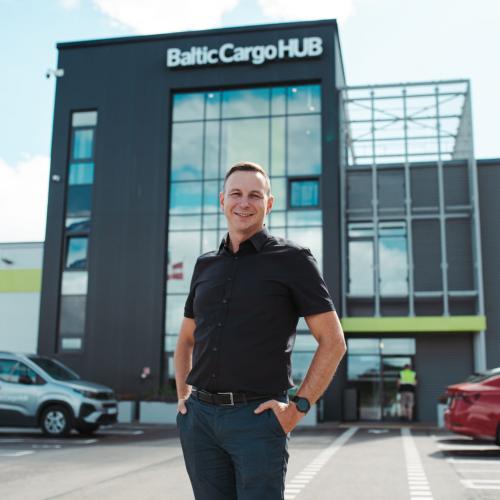


Inga Znotiņa
Route Development and Network Performance Manager
Have you ever wondered what milestones shaped airBaltic’s network strategy and led to its success today?
From the very beginning, airBaltic stood out, Inga recalls. “What made it unique, especially in the context of Latvia’s economy in the 1990s, just after regaining independence, was that it was built on the foundations of European and Scandinavian business culture. That kind of mindset was rare in Latvia at the time, but it gave us solid cornerstones of ethics and structure that still support us to this day.”
airBaltic began with just four routes, but its connection to SAS gave passengers access to a much wider network – a major advantage at a time when flying was still a luxury. “Most passengers were expats or government officials,” Inga recalls. “While the initial route network was shaped largely by their strategic interests, that’s how we learned route development from the inside out.”
A major shift in airBaltic’s network development came in the early 2000s, when Latvia joined the EU. With the introduction of open skies, the European aviation market became accessible, allowing any EU airline to operate routes freely within the region.
“That changed everything,” says Inga. “It marked the start of rapid growth, especially for low-cost carriers. Prices dropped dramatically, and we suddenly found ourselves in a completely new playing field. Traditional carriers struggled, but we adapted quickly – we were small, flexible, and ready to act fast.”
During this time, airBaltic moved toward a point-to-point strategy, mirroring some elements of low-cost models. This approach helped Riga grow into a true regional hub.
Eventually, airBaltic made another bold move, repositioning itself as a transfer airline. This shift capitalized on Riga’s geographic location, transforming it into a hub between North and South, East and West. “It wasn’t easy,” Inga admits. “We had to completely change timetables, adjust slots, rethink everything. But it worked. Half of our passengers were soon transferring through Riga, and we became well known for it in the industry.”
These changes were further reinforced by another major milestone – the introduction of a new aircraft type to the fleet, the Airbus A220-300. “This changed how we think about our network. Suddenly, we could reach destinations like Dubai and Tenerife. It pushed us out of regional thinking,” Inga notes.
Aviation is an industry at the mercy of global forces, and airBaltic has felt that firsthand. The pandemic grounded operations, followed by the sudden loss of key routes due to the war in Ukraine. But rather than stand still, the team identified opportunities to make strategic use of surplus crew and aircraft – expanding ACMI operations. “It was unfamiliar territory,” says Inga, “but full of opportunity. Today, our aircraft operate far beyond our own network, and that’s significantly increased our brand visibility worldwide.”
For Inga and her team, route development is not just a job – it’s one of the most impactful parts of airBaltic’s strategy, shaping how people connect and how the airline grows. “The Baltic region has always been at the heart of our vision,” she says. “We’ve always moved with purpose and ambition - I hope that spirit never fades – it’s the reason we’re still leading today.”