Dinija Danosa
The very first cabin crew contract at airBaltic
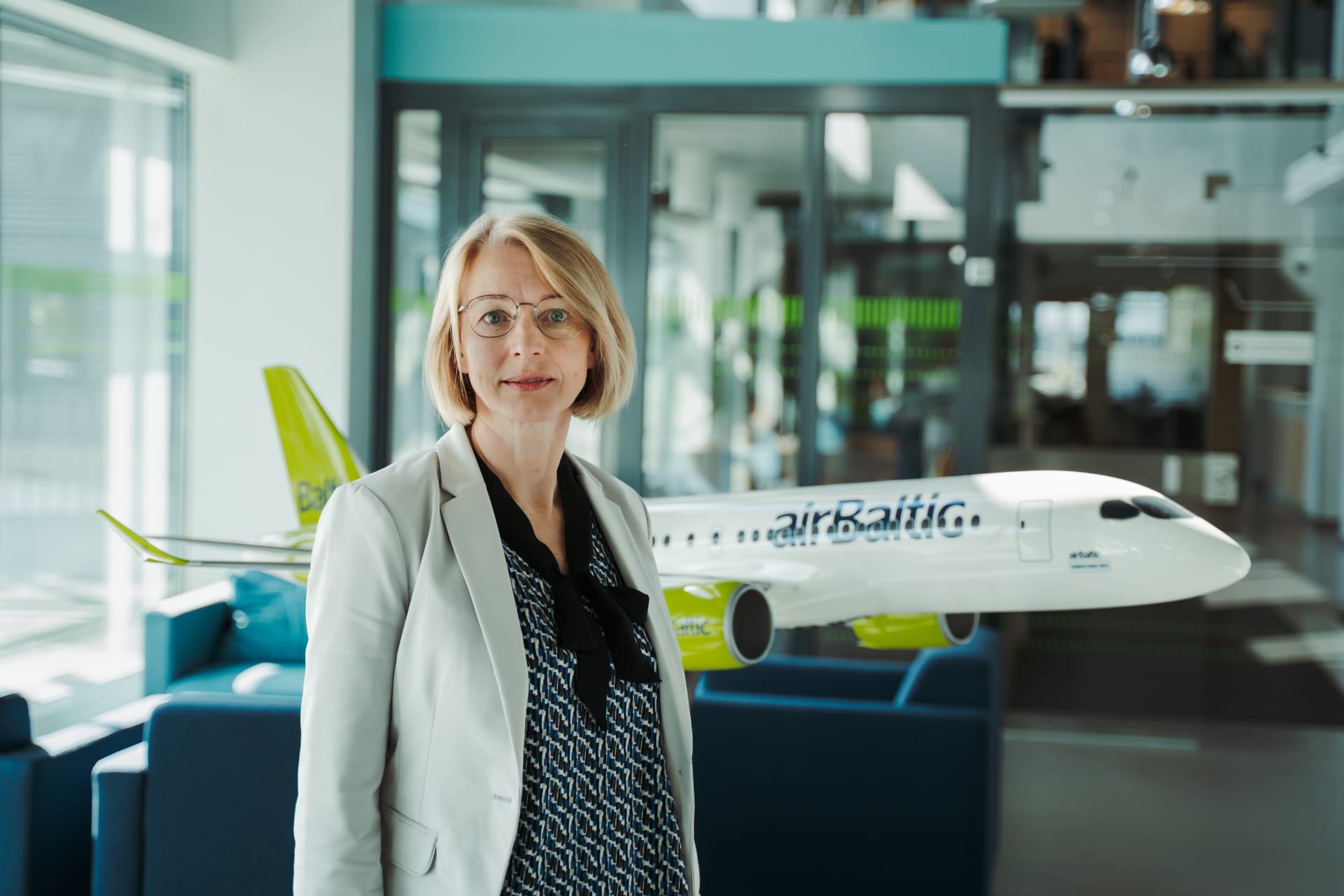
When airBaltic was founded in 1995, Dinija Danosa was there from the very start, becoming one of the first three cabin crew members. She worked on the airline’s second-ever flight, making her a part of the company’s early history.
During her 10 years at airBaltic, Dinija built a diverse career within the airline. In addition to her role as cabin crew, she took on positions as in-flight service specialist, office manager and even served as an assistant to the president.
Interestingly, Dinija’s acquaintance with aviation began even before airBaltic was established. Initially intending to study medicine, she shifted her focus after hearing an advertisement that offered training to become a flight attendant. “At that time, becoming cabin crew required a full year of studies – It was almost like earning a college degree today,” she recalls.
That decision set her on a path that would shape much of her professional life. By August 1995, Dinija was invited to an interview for a position at the newly launched Latvian airline, airBaltic – an intriguing offer she accepted without hesitation. With her initial cabin crew training already completed, she only needed a type qualification for the Saab 340 turboprop aircraft, the first in the airline's fleet.
Reflecting on airBaltic early years, Dinija recalls an airline that was just beginning to find its footing. “Back then, the company was so small that everyone – Flight Operations, Technical Management, the commercial team, and others involved in the airline's operations – worked together in a single room,” she says.
At that time, airBaltic operated only two routes: one-hour flights from Riga to Stockholm and Helsinki, using 33-seat Saab 340 aircraft. “I still remember the inflight service,” Dinija smiles. “Routines were quite complex, and we, as a single crew member on board, had to manage all on our own. It was an unforgettable experience.”
As airBaltic began its expansion in the following years, Dinija was part of the project group to develop Cabin Crew training syllabi and to clear the approval formalities with the Civil Aviation Agency – that was the beginning of airBaltic in-house training.
“I remember those times vividly, especially cabin crew recruitment”, she reflects. “Many candidates believed that selection process is like a beauty contest. However, that was never the case. Even back then, we were assessing whether applicants genuinely understood the responsibilities involved. Aviation encompasses way more than just serving passengers, although that is certainly most visible part of the role.”
Reflecting on how the recruitment approach has evolved, she notes, “The essence has not shifted – the primary goal is to identify service-minded team players who fully understand the importance of collaboration to ensure flight safety.”
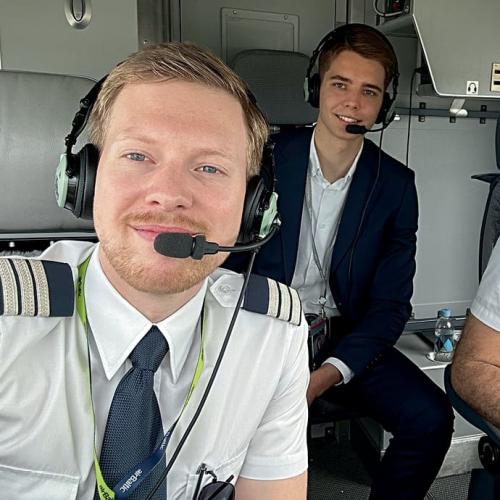
Although she no longer works in aviation, her legacy continues through her family. Her stepson, Kārlis, is now a First Officer at airBaltic. “I held the very first cabin crew contract,” Dinija states proudly, “and Kārlis has the inaugural agreement from the airBaltic Pilot Academy.” When asked if her own career in aviation influenced her stepson’s decision to become a pilot, Dinija ponders thoughtfully. “I don’t think I had a direct impact on him. It was never really a topic of conversation at home during his childhood.”
Dinija fondly recalls their first family trip together in 2005. To make the journey special, she prepared aviation-themed shirts, caps, and other keepsakes for the children, enhancing an unforgettable travel experience. “Perhaps those small touches left a lasting impression,” she admits, not excluding, that her own journey in aviation might have quietly inspired Kārlis to follow the skies as a pilot.
Although being away from aviation for more than 20 years, Dinija doesn’t rule out the possibility of returning one day. “I’m not sure I would come back as a cabin crew, still it would be hard to resist,” she concedes. “Over the years I’ve developed other interests, like communication and intercultural management, so perhaps that’s where I would see myself in aviation again.”
Yet one thing remains unchanged – her deep connection to the profession. “I am a flight attendant in my soul,” Dinija says. “That feeling has never left me. Even now, when I travel, I find myself noticing how passengers place their baggage in the overhead lockers, concerning about space left for others. Sometimes kids almost hold me from standing up to fix that or something else,” she laughs.
For Dinija, the sense of belonging to the skies and to airBaltic is still strong. “Even decades later, I still feel like a cabin crew member – and part of this company,” she says proudly.