

Laila Odiņa
Chairperson of Executive Board at RIX Riga Airport
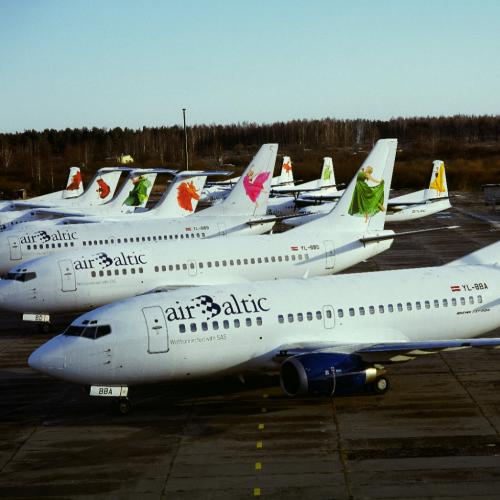
RIX Riga Airport and airBaltic have grown side by side over the years. From Laila Odiņa’s perspective, the airport’s growth strategy and infrastructure investments have always been closely linked to the Latvia’s national airline’s ambitions.
The joint efforts of these two major aviation players have transformed Riga and Latvia into the largest aviation hub in the Baltics. A wide network of destinations and connectivity to Europe, Asia, and other parts of the world has enabled Baltic residents to travel more easily and quickly, while allowing Riga Airport to become a key transfer hub not only in the Baltics but also in Northern Europe.
“RIX Riga Airport is home to airBaltic, and for many years we have shared a common strategic goal – to make Riga Airport and Latvia the air traffic hub of the Baltics and, in the future, also of Northern Europe,” says Odiņa.
“As the national carrier, airBaltic accounts for more than half of Riga Airport’s passenger traffic and is the leading cargo operator. The airport’s developed and modern runway and terminal infrastructure, maintenance capabilities, and services are directly tied to meeting the growth needs of the national airline,” she continues.
With Latvia’s location in the northeastern corner of Europe and limited rail connectivity to other countries, aviation remains the fastest and most convenient way for residents to travel. Odiņa emphasizes that airBaltic’s extensive route network not only improves connectivity but also contributes significantly to the country’s economy, tourism, and international visibility.
“It is also one of the country’s largest employers, offering highly skilled jobs that give employees the chance to gain experience in a large, international company with a demanding management team focused on industry leadership, quality, innovation, and high flight safety standards. I personally know many executives who started their careers at airBaltic as cabin crew, sales specialists, or finance professionals and later went on to build successful business careers using that experience,” Odiņa adds.
In her personal life, airBaltic represents 16 years of growth in leadership roles within the company, followed by management positions in other aviation-related organizations both in Latvia and abroad. “That is why I still follow the airline’s work closely, take pride in its achievements, and feel deeply about its setbacks,” she notes.
Odiņa also highlights the airline’s transition to the Airbus A220-300 fleet, which not only streamlined processes and introduced one of the world’s most modern aircraft but also significantly advanced the airport’s sustainability goals by helping to reduce CO₂ emissions and noise levels.