

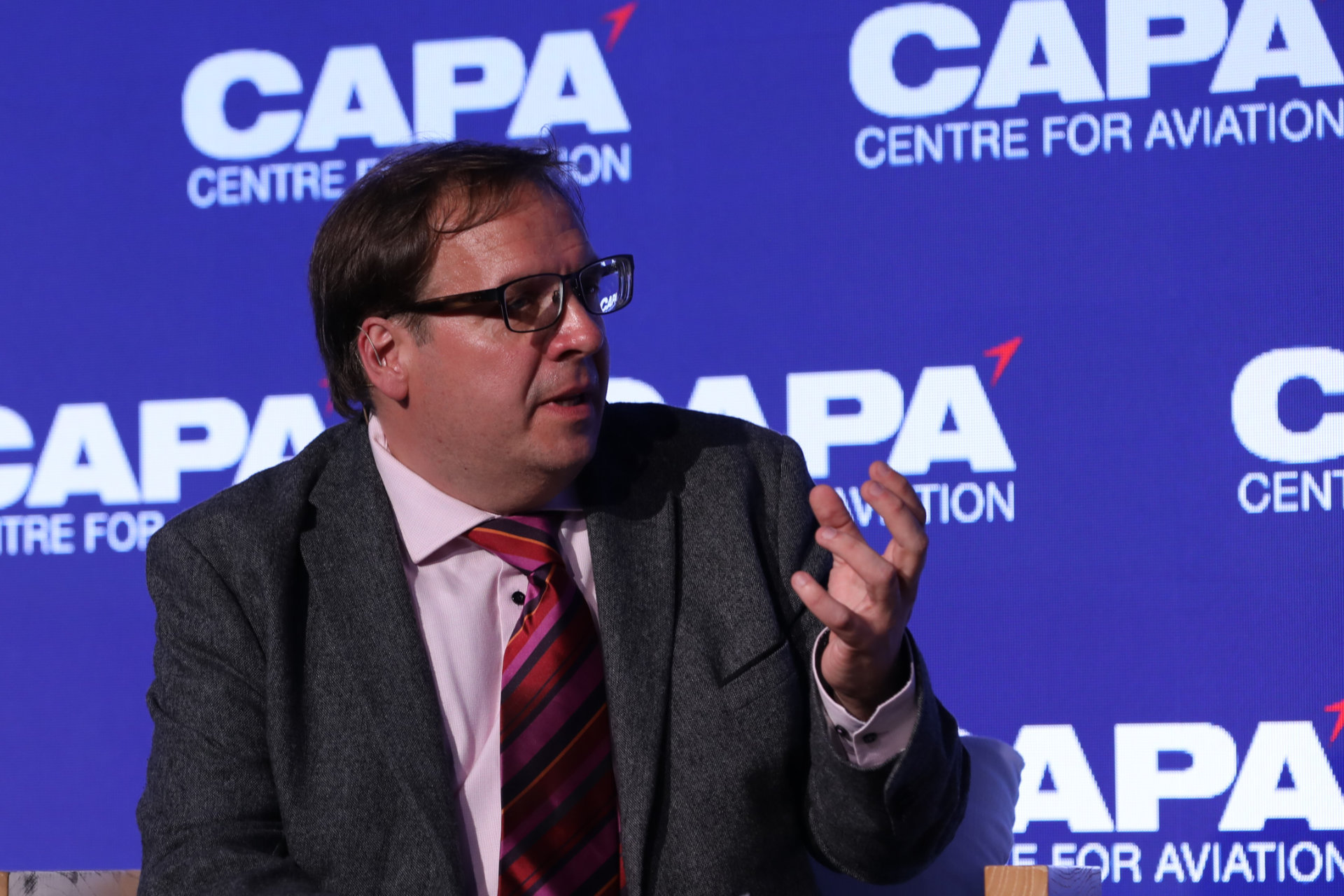
Richard Maslen
Head of Analysis at CAPA - Centre for Aviation
Richard Maslen has followed airBaltic’s journey for decades. From his first encounters with the airline in the late 1990s to seeing its bold moves in recent years, Maslen describes airBaltic “becoming a key player in European skies”.
He highlights the foresight in creating a pan-Baltic brand early on, positioning it as the airline of the Baltics rather than just Latvia, which he believes has been instrumental in strengthening its regional identity and appeal. “For an airline that’s supporting a small country of a population of less than two million, airBaltic certainly delivers on a level far beyond its size.”
From his perspective, connectivity is essential to so many people, and in such a busy environment it can be difficult to stand out. “But airBaltic seems to have been able to achieve that,” he says, “especially when it comes to connecting the Baltic region to the rest of Europe and even beyond, supporting growth, connectivity and the economic development of the Baltic region.”
Maslen notes that airlines in general have really struggled to adapt and evolve and have been very slow to take on board technological advancements. “What sets airBaltic apart,” he says, “is that it’s been very nimble as a business unafraid to embrace new ideas. It has helped the airline to challenge the market and incorporate new developments.”
A significant milestone in airBaltic’s growth, he says, was the decision to be the launch customer for the Airbus A220-300 aircraft – a major decision to commit to a program that hadn’t been fully evolved.
Reflecting on the post-pandemic years, he mentions airline’s adaptability, and credits airBaltic’s strong management for providing stability during a challenging time for aviation. He also highlights the airline’s strategic expansion into leasing operations, noting that airBaltic identified an opportunity to provide services for other airlines and was among the first national carriers to do so.
In his view, “the fact that other major airlines in Europe are using airBaltic to support their network is enough of a recommendation for the success of what airBaltic offers.”
Maslen describes his interactions with airBaltic’s people as consistently open and supportive, and recalls the evolution of the airline’s liveries over the years – from the early blue-and-white design, to the vibrant dancers on the tail of the fleet, and eventually to the distinctive lime-green tails that remain a hallmark of the brand today.
“I only hear positives when the airBaltic brand is mentioned,” Maslen says. “I’ve been fortunate to fly with airBaltic a couple of times in the last couple of years and each experience left a very positive impression. I felt special and it seemed that the staff really enjoyed working with passengers.”